
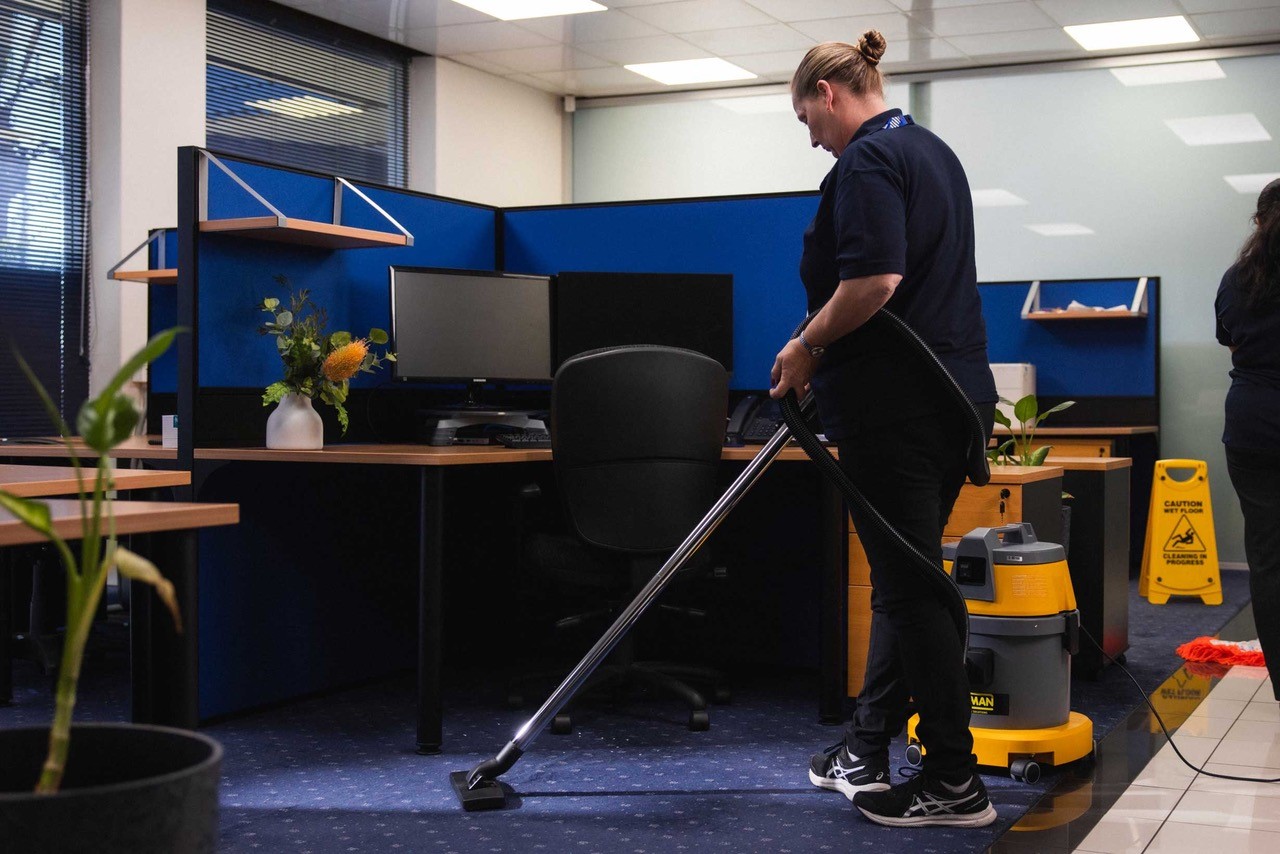
What does “compliance” mean for office cleaning in Sydney?
Compliance in commercial office cleaning Sydney means they follow relevant workplace health and safety duties, infection control expectations, chemical handling rules, waste requirements, and building or tenancy standards. It also means cleaning is documented, staff are trained, and high-risk areas are managed consistently rather than ‘as needed.’
In practice, compliance in commercial office cleaning Sydney looks like clear scopes of work, safety data sheets, correct dilution and storage of chemicals, and records that show cleaning was completed.
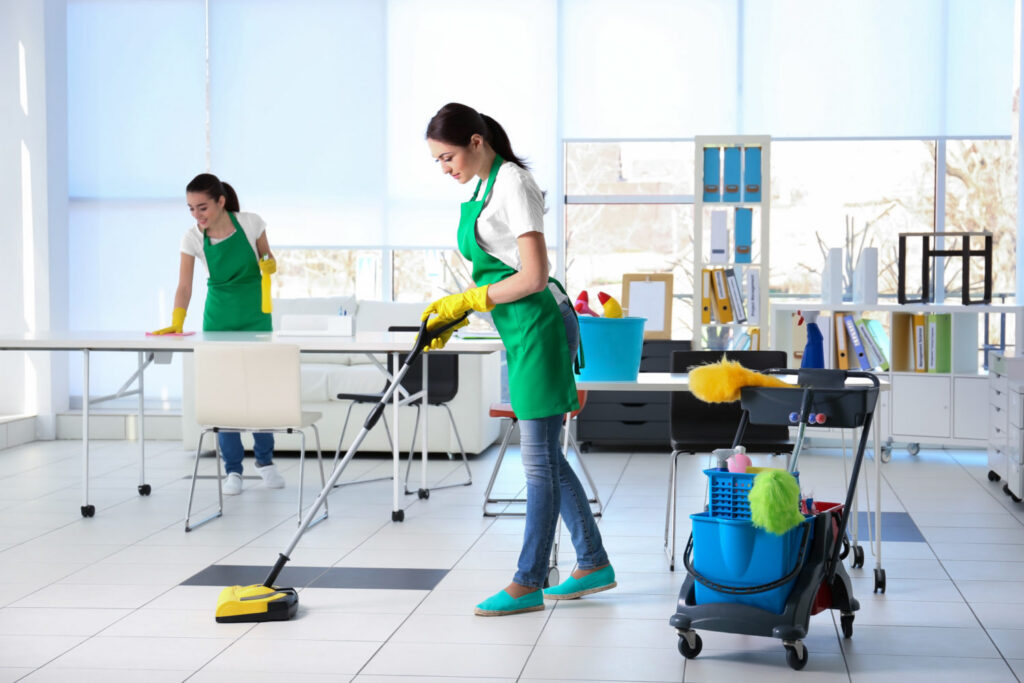
Which high-touch surface cleaning services are non-negotiable?
High-touch point cleaning is essential because these surfaces drive most day-to-day contamination risk. They should include disinfecting door handles, lift buttons, light switches, taps, kitchen touchpoints, shared desks, meeting room tables, printers, and reception counters.
In many offices, the biggest compliance gap is not floors. It is inconsistent touchpoint disinfection, especially in shared spaces and hot-desking environments.
What bathroom and hygiene services are required to meet basic workplace expectations?
Bathroom cleaning is a core compliance service because it affects health, odour control, and cross-contamination. They should provide toilet and urinal sanitation, basin and tap disinfection, mirror cleaning, floor cleaning, bin emptying, and restocking of soap, paper, and sanitiser where supplied under workplace bathroom hygiene and sanitation standards.
They should also include periodic deep cleaning such as scale removal, grout cleaning, and high-level disinfection for problem areas.
How should kitchens and breakout areas be cleaned for safety and pest control?
Kitchen and breakout cleaning matters because food waste and shared appliances create hygiene and pest risks. They should clean and disinfect benches, sinks, microwaves, fridge handles, tables, and splashbacks, plus empty bins and replace liners. You may like to visit eco-friendly pest control and integrated pest management in workplaces to learn more about practical strategies for preventing pests through sustainable cleaning and waste control approaches.
A compliant program usually includes scheduled deep cleans of fridges, dishwashers, and hard-to-reach areas, with clear rules on what cleaners do versus what staff are expected to maintain.
What floor and carpet services support compliance, not just appearance?
Floor care supports safety through slip prevention and dust control. They should vacuum thoroughly, spot clean spills quickly, and mop hard floors with correct signage and procedures to manage slip hazards.
For compliance and asset protection, a schedule should include periodic carpet extraction, hard floor scrubbing, and sealing or polishing where relevant. Poor floor maintenance can create trip risks at edges, entry mats, and transitions.
What waste management and recycling services are essential?
Waste handling is an essential cleaning service because it affects hygiene, odours, sharps risk, and building compliance. They should empty general waste and recycling, replace liners, clean bin stations, and remove waste to designated collection areas in line with building rules.
Where sanitary bins are used, they should be serviced to an agreed schedule. If confidential waste bins exist, their handling should follow chain-of-custody requirements set by the client.
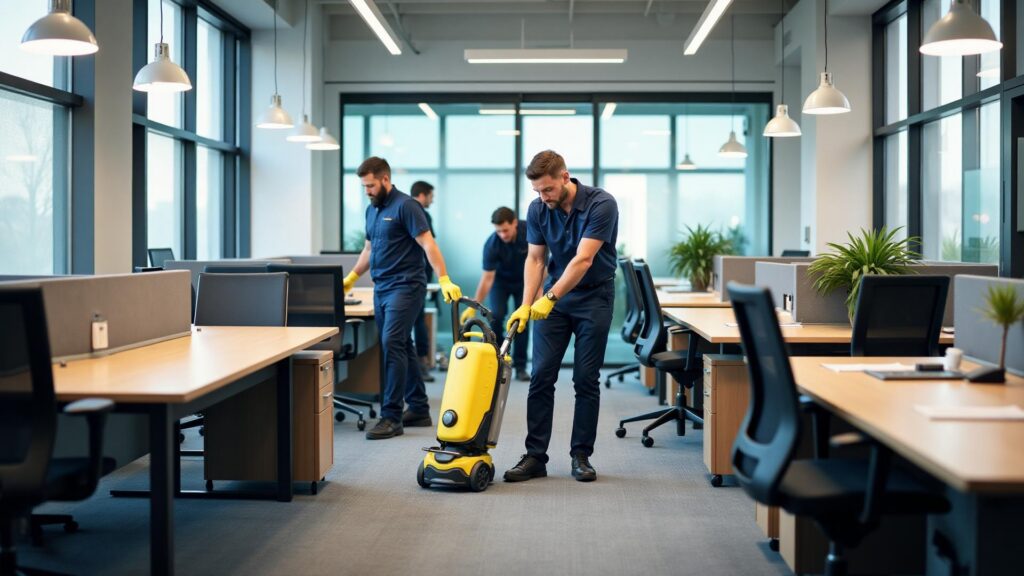
When are disinfecting and infection control programs needed?
They are needed when the office has high occupancy, frequent visitors, shared desks, or recent illness outbreaks, and when the client’s duty of care demands a higher standard than basic cleaning. A proper program specifies products, dwell times, touchpoint lists, and frequency. See choosing a commercial cleaning company for long-term maintenance for what to assess when selecting a provider that can consistently support higher hygiene standards over time.
They should also be able to provide periodic “enhanced cleans” after incidents, with clear communication on what was treated and what areas were excluded.
What cleaning documentation is typically required for audits and accountability?
Documentation is what turns cleaning into a verifiable compliance activity. They should provide cleaning checklists, scope of works, schedules, incident reports, and site-specific risk assessments.
Many offices also expect chemical registers, safety data sheets, staff training records, and proof of insurance. Where required, they should keep logs for bathrooms, consumables refills, and periodic deep cleans.
How do they manage chemical safety and WHS responsibilities on site?
They should store chemicals safely, label decanted bottles, follow correct dilution, and ensure staff use appropriate PPE. They should also use wet floor signs, manage electrical safety for equipment, and follow procedures for slips, trips, and manual handling.
A compliant provider does not improvise. They use documented methods, train staff, and adjust controls based on site risks such as stairs, polished floors, or public access areas.
What specialist services are essential in shared buildings and strata-managed sites?
In many Sydney CBD and business park sites, compliance depends on aligning with building management rules. They should clean entryways, lifts, common corridors, and end-of-trip facilities to agreed standards, including after-hours access protocols.
They may also need loading dock waste procedures, swipe access controls, and sign-in requirements. Failing these can create tenancy breaches even if the office itself looks clean.
How often should essential office cleaning services be delivered?
The minimum frequency depends on headcount, visitor volume, and whether they operate hot desks or public-facing reception. Many offices need daily cleaning of bathrooms, kitchens, touchpoints, and waste, with less frequent deep cleaning scheduled monthly or quarterly.
A compliant plan matches risk. If service frequency is too low, they may meet a budget target but fail duty-of-care expectations when issues arise.
What should they look for when choosing a compliant office cleaner in Sydney?
They should look for a provider that defines inclusions clearly, offers site-specific risk controls, and can produce documentation without hesitation. They should also confirm supervision, quality checks, staff screening, and a reliable process for rectifying issues.
Most problems come from vague scopes. A compliant cleaner sets measurable tasks, clear frequencies, and realistic turnaround times, then proves delivery with records.
FAQs (Frequently Asked Questions)
What does compliance mean in commercial office cleaning in Sydney?
Compliance in Sydney office cleaning means adhering to workplace health and safety duties, infection control standards, chemical handling regulations, waste management requirements, and building or tenancy standards. It involves documented cleaning processes, trained staff, consistent management of high-risk areas, clear scopes of work, proper chemical storage and dilution, and records proving cleaning completion.
Which high-touch surfaces require non-negotiable cleaning services in Sydney offices?
Essential high-touch surfaces that must be disinfected include door handles, lift buttons, light switches, taps, kitchen touchpoints, shared desks, meeting room tables, printers, and reception counters. Consistent disinfection of these areas is critical to reduce contamination risk, especially in shared spaces and hot-desking environments.
What bathroom and hygiene services are necessary to meet workplace expectations?
Bathroom cleaning should cover toilet and urinal sanitation, basin and tap disinfection, mirror cleaning, floor cleaning, bin emptying, and restocking soap, paper towels, and sanitizers. Periodic deep cleans such as scale removal, grout cleaning, and high-level disinfection for problem areas are also required to maintain health standards and control odours.
How should kitchens and breakout areas be cleaned for safety and pest control?
Kitchens and breakout areas must have benches, sinks, microwaves, fridge handles, tables, and splashbacks cleaned and disinfected regularly. Bins should be emptied with liners replaced. Scheduled deep cleans of fridges, dishwashers, and hard-to-reach spots are essential. Clear roles between cleaners’ duties and staff maintenance help maintain hygiene and prevent pest risks.
What floor care services support compliance beyond appearance in Sydney offices?
Floor care includes thorough vacuuming of carpets, prompt spot cleaning of spills with appropriate signage to prevent slips on hard floors. Compliance requires scheduled carpet extraction, hard floor scrubbing, sealing or polishing where applicable. Proper maintenance prevents trip hazards at edges, entry mats, and transitions enhancing workplace safety.
What documentation is typically required for office cleaning audits and accountability?
Essential documentation includes cleaning checklists, detailed scopes of work, service schedules, incident reports, site-specific risk assessments, chemical registers with safety data sheets, staff training records, proof of insurance as well as logs for bathroom maintenance consumables refills and periodic deep cleans. This documentation verifies compliance during audits.